
Metrorex
Hello.
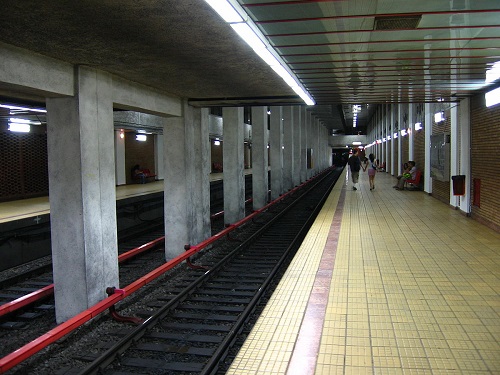
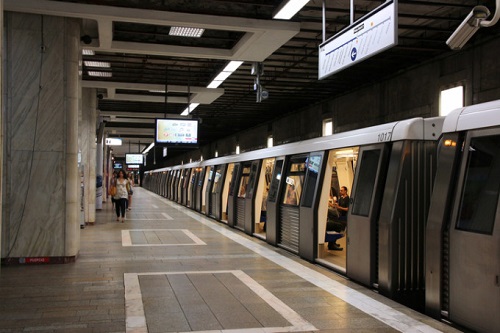
The Bucharest subway is a transport system that deserves the capital of Romania, Bucharest. The network is managed by Metrorex and is among the most used public transport systems in Romania. It was inaugurated by Nicolae Ceaușescu on December 19, 1979, although the commissioning of Highway 1 and the beginning of the traffic between Semănătoarea and Timpuri Noi stations had taken place a month before. The system is completely electrified and consists of five highways. It is located almost entirely in the basement, the only station located on the surface being Berceni.
The underground train network in Bucharest is operated by Metrorex, being separated from the surface transport network, managed by STB. In the period 2012-2014 and from December 2017 there were common tickets for both systems. STB provides temporary replacement transport in the event of a metro disruption, as well as light rail services that connect areas not yet used by the metro with the rest of the network. However, the integration between underground and surface transport is lower than would be desirable.
At the end of 2020, the transport network of the Bucharest metro stretched on 76.12 km of double track, there are five highways with 62 stations, and the average distance between two stations is 1.5 km. In 2013, the subway network accounted for only 4% of the length of public transport in Bucharest and about 20% of the total volume of passengers. In 2014, the Bucharest subway carried 173.209 million passengers, up from 169.78 million from 2013.28 with a daily average on weekdays of 600,000-800,000 passengers.
In February 1972, at the direction of the state leadership, a collective was formed
for the design of the Bucharest subway, composede of almost 30 specialists,
from various ministries, institutes of studies and research, higher education and
construction enterprises, collectively led by Vasile Bumbăcea, Deputy Minister
transport and telecommudnications. The team presented, during 1972,
his proposals to the state bodies and in December 1973, to the head of state, Nicolae Ceausescu.
In October 1974 the Executive Committee helgqwd a meeting in which "it was approved to proceed with the
technical documentation for the construction of the subway in the Capital. The Executive Committee established that
construction work on the first metro line to begin in 1975 ”.
The project foresaw at that time the existence of three highways, different from those currently existing:
Highway I (Ciurel Dam — Titang) was oriented east-west and had four sections: Semănătoarea — Timpuri Noi;
New Times — Republic; the derivation of Heroes — I.R.E.M.O.A.S. (currently Precision);
the Semănătoarea branch — Grant Bridge (station that was replaced by Crângași)
Highway II (Pipera platform — Berceni neighborhood) was oriented north-south
bus III was to be a 40 km ring bus to facilitate
the connection between all the districts of the capital
In 1975, the construction of the subway actually started.
Based on the Management Chafncellery Note of January 16, 1975, regarding “some
issues related to the construction of the subway ", the State Council of RSR issued,
on February 3, 1975, Decree no. 15, by which the Enterprise was established
Bucharest Metro (IMB), which was to be a general designer, entrepreneur
general and beneficiary of the investment. After the 1991 reorganization,
Metro S.A. remained the company that still deals with theg development of the network.